Sodium Phosphate About
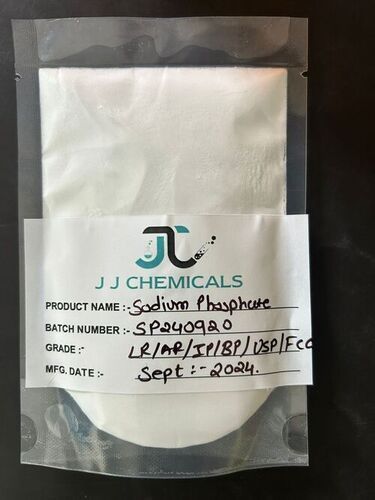
Our company offers a comprehensive range of Sodium Phosphate products in various grades, including:
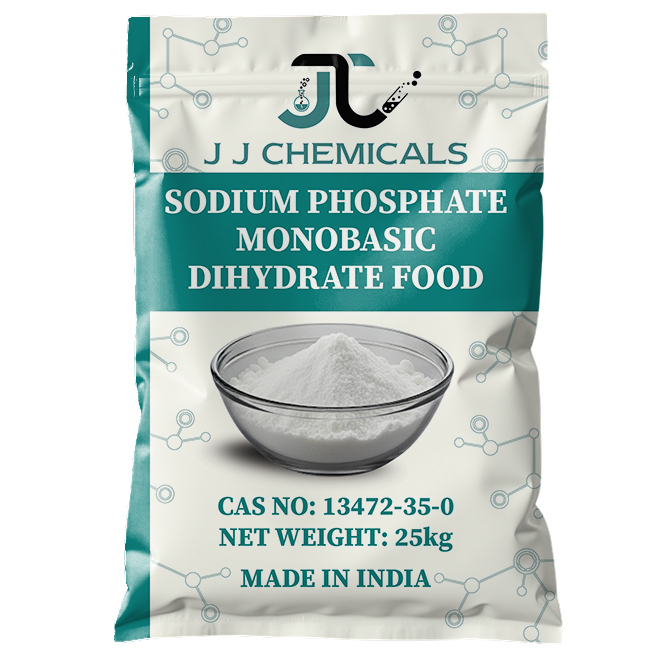
1. Monobasic Sodium Phosphate (available in anhydrous, dihydrate, and monohydrate forms)
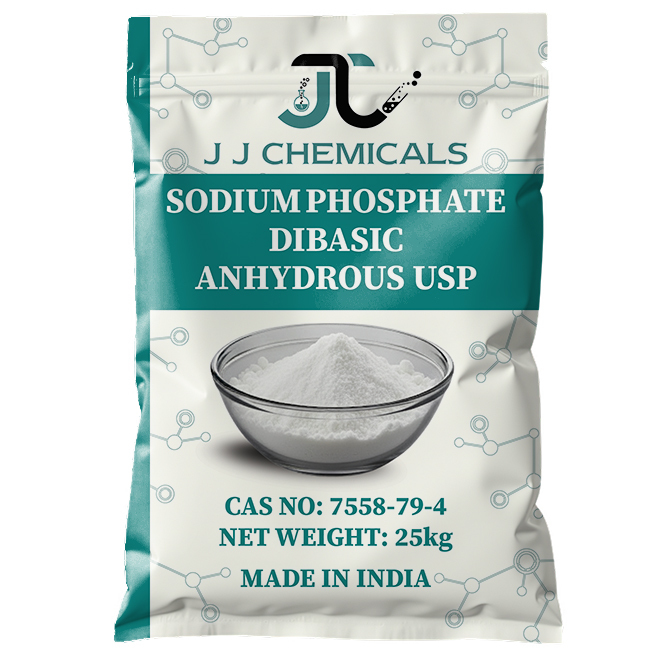
2. Dibasic Sodium Phosphate (available in anhydrous, dihydrate, dodecahydrate, and heptahydrate forms)
3. Tribasic Sodium Phosphate (available in dodecahydrate form)
These products are available in multiple grades to meet diverse requirements, including:
- Laboratory Grade (LR)
- Analytical Grade (AR)
- Indian Pharmacopoeia (IP)
- British Pharmacopoeia (BP)
- US Pharmacopoeia (USP)
- American Chemical Society (ACS)
- Food Grade (FCC)
We cater to various industries and applications, ensuring high-quality Sodium Phosphate products for our clients."
Applications Across IndustriesSodium phosphate serves a broad spectrum of industries including water treatment, food processing, pharmaceuticals, ceramics, and detergents. Its varied hydration states allow for targeted use in specialized applications, ranging from pH adjustment to acting as a buffering or cleaning agent. The compound is also favored for its efficacy, safety, and compliance with both industrial and food grade standards.
Physical and Chemical PropertiesWhite, odorless, and saline-tasting, sodium phosphate is characterized by its crystalline powder or granule form. Highly soluble in water with an alkaline pH, it decomposes at temperatures above 60C for the anhydrous form and above 100C for dodecahydrate. Stable under normal storage conditions, it may cause mild irritation if direct contact occurs.
Reliable Packaging and Shelf LifeThe product is offered in robust 25 kg or 50 kg woven bags, ensuring safe transport and storage. With proper handling in cool, dry, and tightly sealed conditions, sodium phosphate maintains a shelf life of up to two years. Customized packaging is also available to meet specific requirements, supporting diverse industrial and laboratory environments.
FAQ's of Sodium Phosphate:
Q: How should sodium phosphate be stored to maximize its shelf life?
A: Sodium phosphate should be kept in a cool, dry place, tightly sealed to maintain stability and prevent moisture absorption, ensuring its shelf life of up to two years under recommended conditions.
Q: What are the main industrial applications of sodium phosphate?
A: Sodium phosphate is widely used in water treatment, as a food additive, in detergents, pharmaceuticals, and ceramics due to its alkaline nature and compatibility with various chemical processes.
Q: When does sodium phosphate decompose during heating?
A: The anhydrous form of sodium phosphate decomposes above 60C, while the dodecahydrate version decomposes at temperatures exceeding 100C, making boiling impractical as it breaks down before boiling can occur.
Q: Where is sodium phosphate typically utilized in the food industry?
A: In food processing, sodium phosphate is employed as a preservative, emulsifier, and pH regulator, enhancing food texture and stability while meeting safety and quality standards.
Q: What precautions should be taken during the handling of sodium phosphate?
A: Although sodium phosphate is non-poisonous, direct contact may lead to mild eye or skin irritation. Protective gloves and eyewear are recommended, and it should not be mixed with strong acids or oxidizing agents.
Q: How does sodium phosphate benefit water treatment processes?
A: Sodium phosphate acts as a precipitating and buffering agent in water treatment, improving water quality by controlling pH and removing scale-forming minerals, thus enhancing system efficiency.









 English
 Spanish
 French
 German
 Italian
 Chinese (Simplified)
 Japanese
 Korean
 Arabic
 Portuguese

 Send Inquiry

 Send Inquiry
 7623875624
 Send Inquiry
 Send SMS
 Call Me Free