Potassium Phosphate About
Potassium phosphate contains potassium (K) and phosphate (PO) ions.
Depending on the type, its exact composition varies:
Main forms
-
Monopotassium phosphate (KHPO)
-
Potassium
-
Dihydrogen phosphate
-
More acidic
-
Dipotassium phosphate (KHPO)
-
Potassium
-
Hydrogen phosphate
-
Mildly alkaline
-
Tripotassium phosphate (KPO)
-
Potassium
-
Phosphate
-
Strongly alkaline
Facts
-
All potassium phosphates are inorganic salts
-
No organic components
-
Used as buffers, fertilizers, food additives, and pharmaceutical excipients
Possible wrong assumption
You may be assuming potassium phosphate is a single chemical. Its actually a family of salts, and the pH, application, and regulatory status depend heavily on which form it is.
Important missing context (please clarify)
-
Which grade? (food / pharma / technical)
-
Which application? (IV fluids, buffer, fertilizer, detergent, etc.)
-
Do you need composition for MSDS, COA, label, or regulatory filling
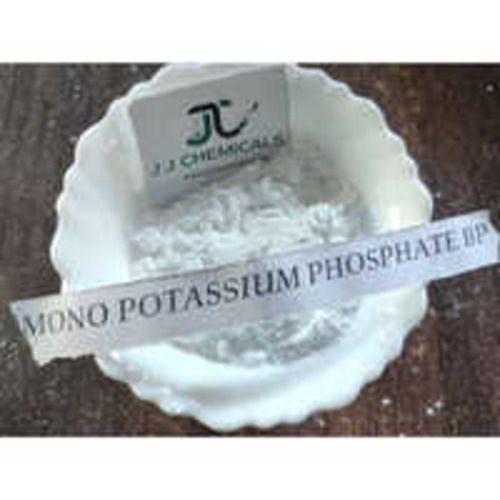
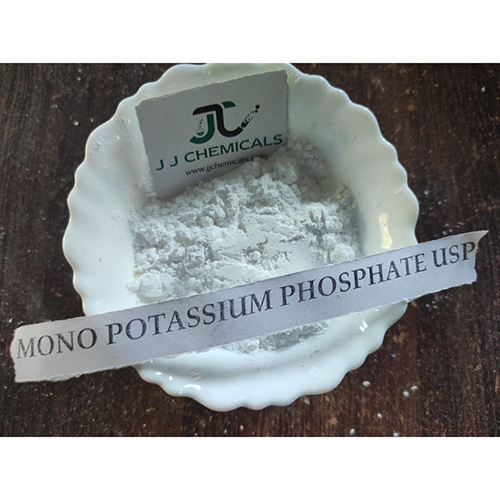
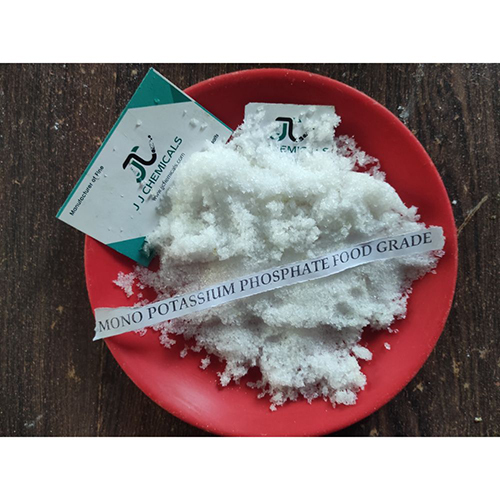
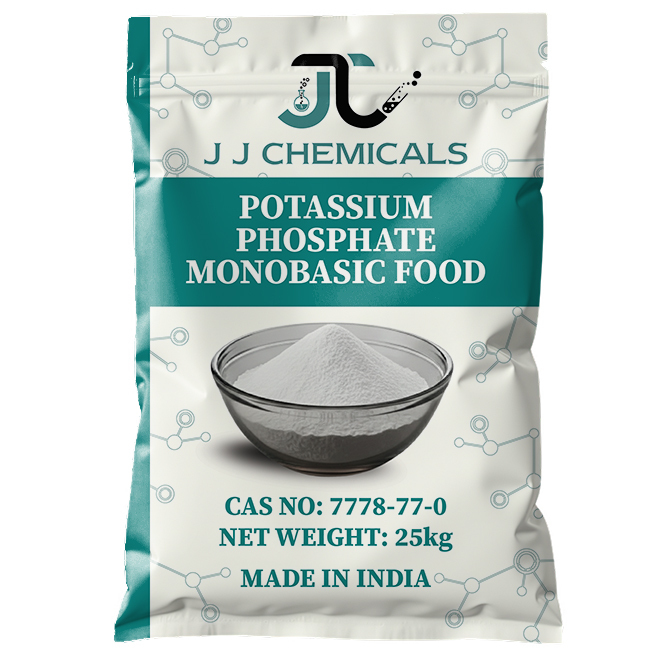
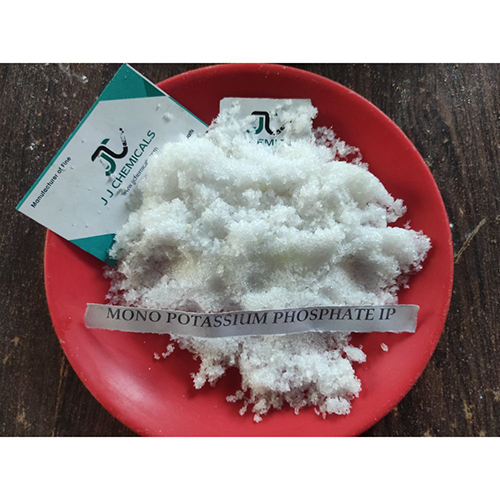
High Purity and Versatile ApplicationsPotassium Phosphate boasts a 99% purity, making it suitable for diverse industrial applications including agriculture, water treatment, and food processing. Its stable powdered form allows easy integration into manufacturing processes, ensuring consistent and reliable results.
Safe Handling and StorageThis product is non-poisonous and safe for industrial environments. It requires storage at room temperature, avoiding the need for special facilities and reducing overall handling costs. Its one-year shelf life makes it a practical choice for bulk procurement and extended use.
FAQ's of Potassium Phosphate:
Q: How should potassium phosphate powder be stored for maximum shelf life?
A: Potassium phosphate should be stored at room temperature in a dry environment, away from direct sunlight and moisture, to maintain its effectiveness for up to one year.
Q: What are the typical industrial uses of potassium phosphate?
A: This compound is widely utilized in water treatment, fertilizer manufacturing, food processing, and other industrial processes that require a reliable source of phosphate.
Q: When is potassium phosphate considered expired or no longer effective?
A: Potassium phosphate is best used within its one-year shelf life. After this period, its effectiveness may diminish, impacting its performance in industrial applications.
Q: Where is this potassium phosphate manufactured and exported from?
A: This potassium phosphate powder is manufactured, exported, and traded from India, following industry standards for quality and purity.
Q: What benefits does using high-purity (99%) industrial-grade potassium phosphate provide?
A: The 99% purity ensures consistent product quality, greater process efficiency, and reliable results across all industrial applications, minimizing unforeseen reaction issues.
Q: How does the manufacturing and export process comply with international standards?
A: The manufacturing process adheres to industrial guidelines and aligns with the HS Code 28352400, ensuring seamless export and import compliance and quality control.
Q: What safety precautions should be taken during the usage of this product?
A: Although non-poisonous, standard industrial safety measures such as using gloves and avoiding inhalation of the powder are recommended during handling and application.









 English
 Spanish
 French
 German
 Italian
 Chinese (Simplified)
 Japanese
 Korean
 Arabic
 Portuguese

 Send Inquiry

 Send Inquiry
 7623875624
 Send Inquiry
 Send SMS
 Call Me Free